Demystifying AI and Putting It to Use: Notes from a Recent AI for Nonprofits Workshop
By Guest Writers: Cory Garfin and Devon VanHouten-Maldonado
Lately, it seems like every conversation about work inevitably leads to questions about AI, and the nonprofit sector is no exception. CVNC has been hearing from a lot of leaders who are eager to understand the technology, but who are also stretched thin and doing their best to survive day-to-day. New tools can feel like yet another demand on time better spent on the mission.Their questions go beyond productivity to how to use AI effectively and ethically.
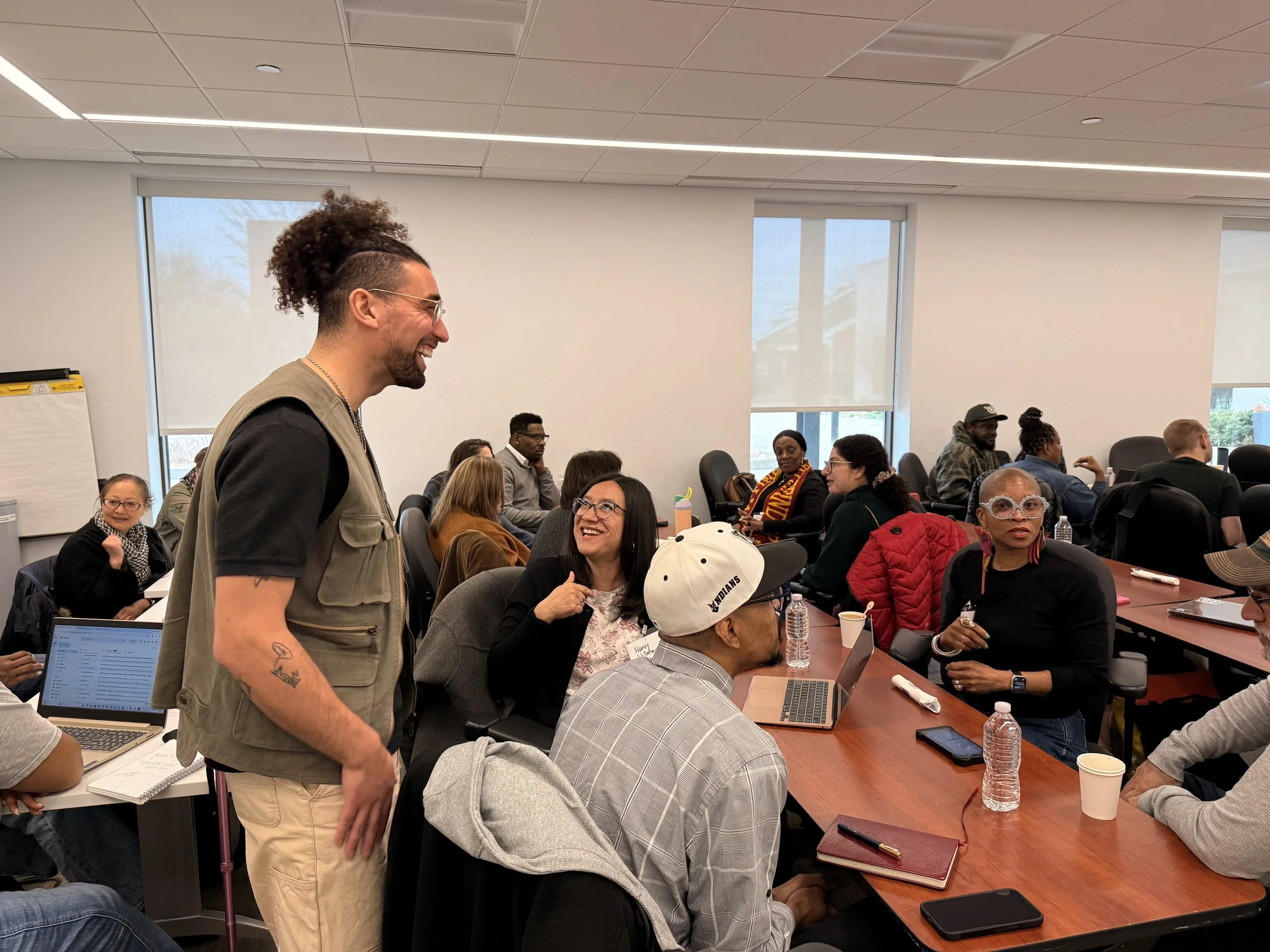
So when CVNC invited us to lead a free training for Chicago nonprofits — a workshop called "AI for Nonprofit Management: Myths, Risks, and Real-World Uses" — we designed the session with the understanding that nonprofits need more capacity, not more work, and that any real adoption across the sector will only happen if it allows people to spend less time on their computers and more time on the work they love.
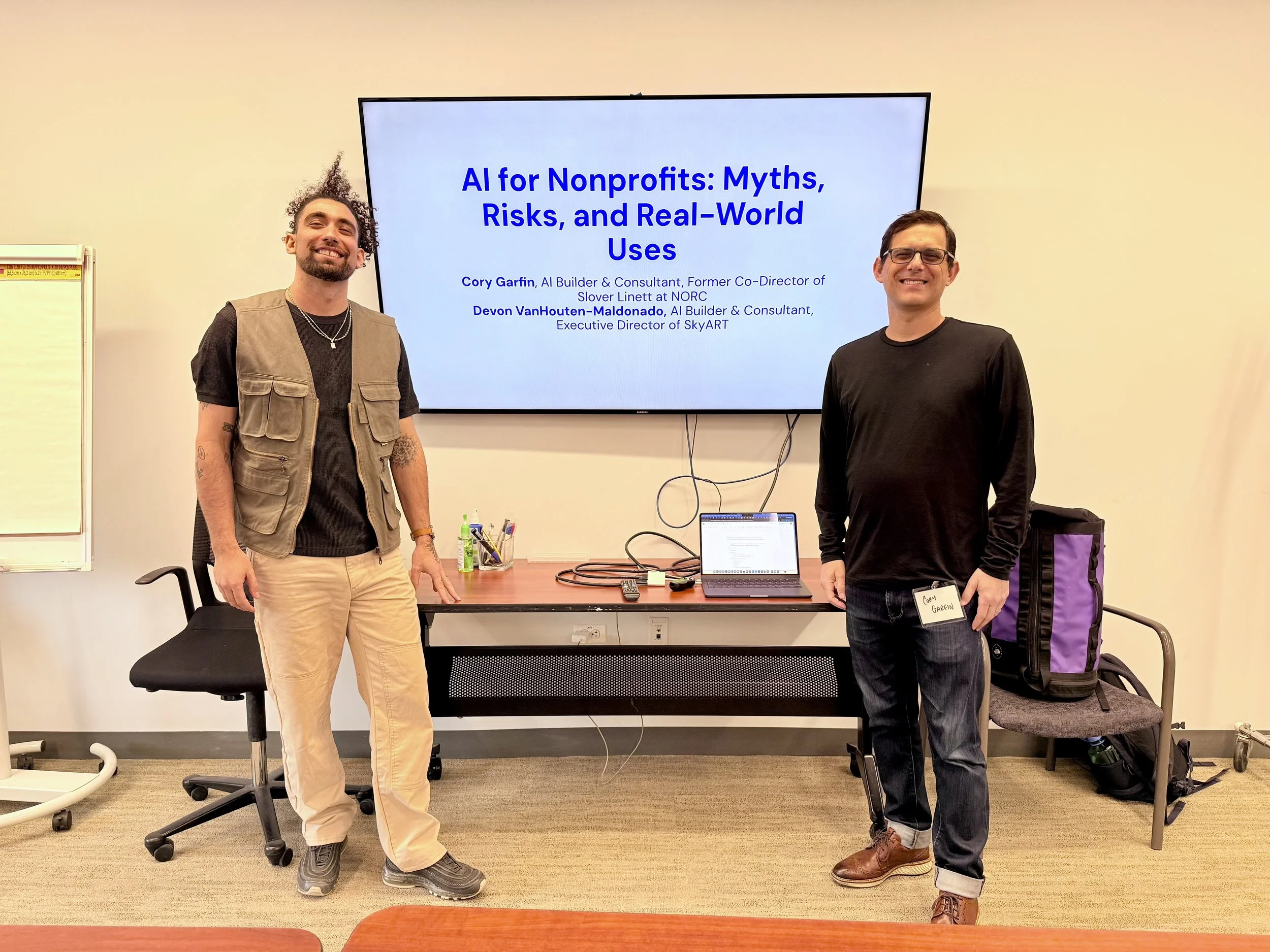
It was clear from the turnout and the energy in the room that there's a real hunger for this kind of conversation. We started the training by asking for a show of hands from anyone whose organization had an AI policy. That no hands went up wasn't particularly surprising. A recent study found that while almost all nonprofits (92%) use AI in some fashion, less than half (47%) have an official policy. The findings illustrate a risk for the sector that's as much about internal cultural change and standard-setting as it is about the technology. If you don't have an AI policy, you actually do: "anything goes." People are using their own paid accounts or free, less secure versions, without clarity on recommended uses, guardrails on tools, or rules about what data can be uploaded.
If workshop participants took nothing else from our time together, we wanted them to walk away understanding the importance of AI policies and with a plan for how to start crafting one. A good policy doesn't have to be long, but it should cover which tools are pre-approved for staff use, acceptable uses of AI, and the kinds of data that should never be uploaded to an outside tool. We also talked about the importance of a "human in the loop" rule so that nothing AI-generated leaves the org without a person reviewing it. And because this tech is changing so quickly, we recommended revisiting the policy at least every six months.
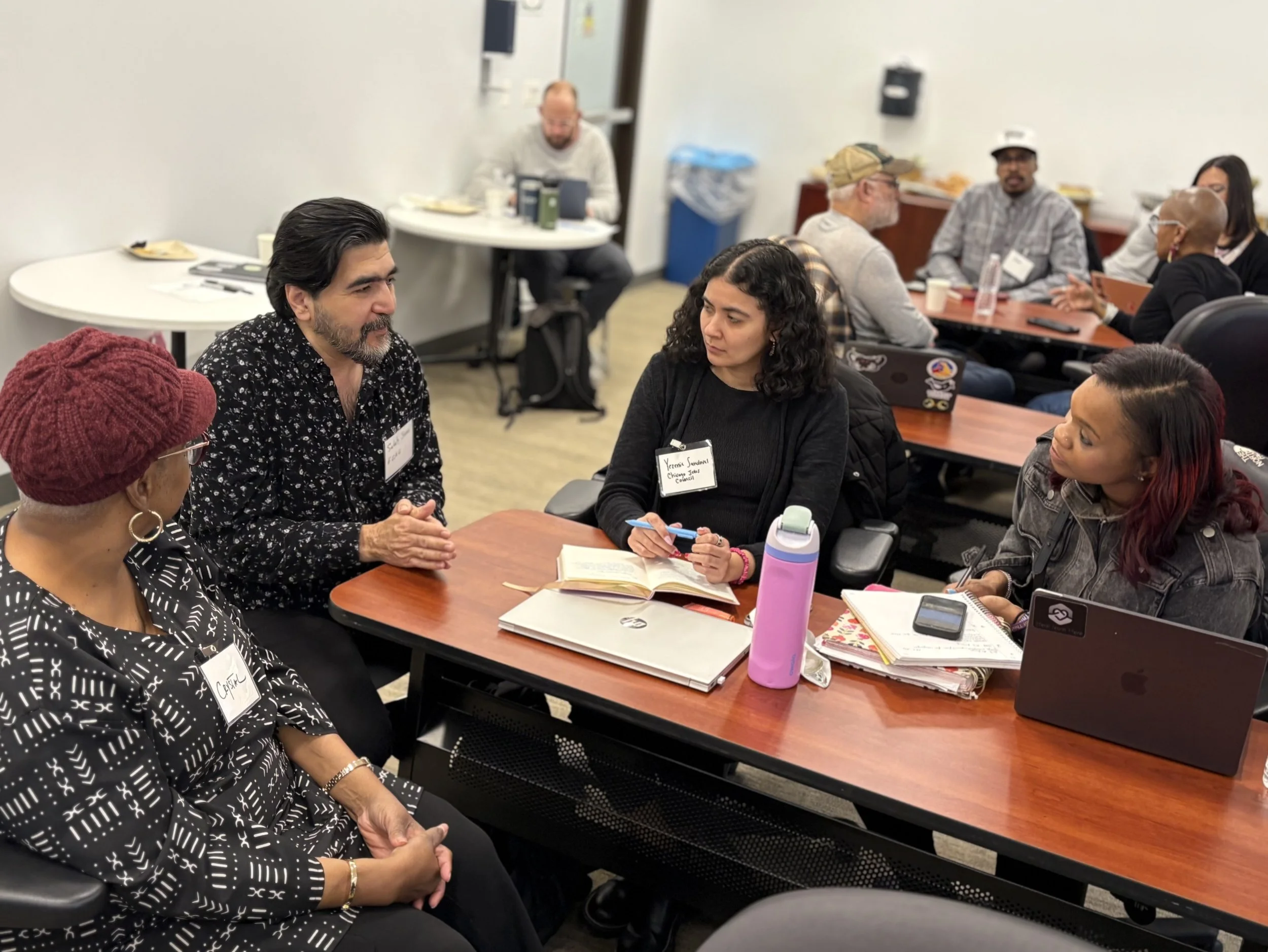
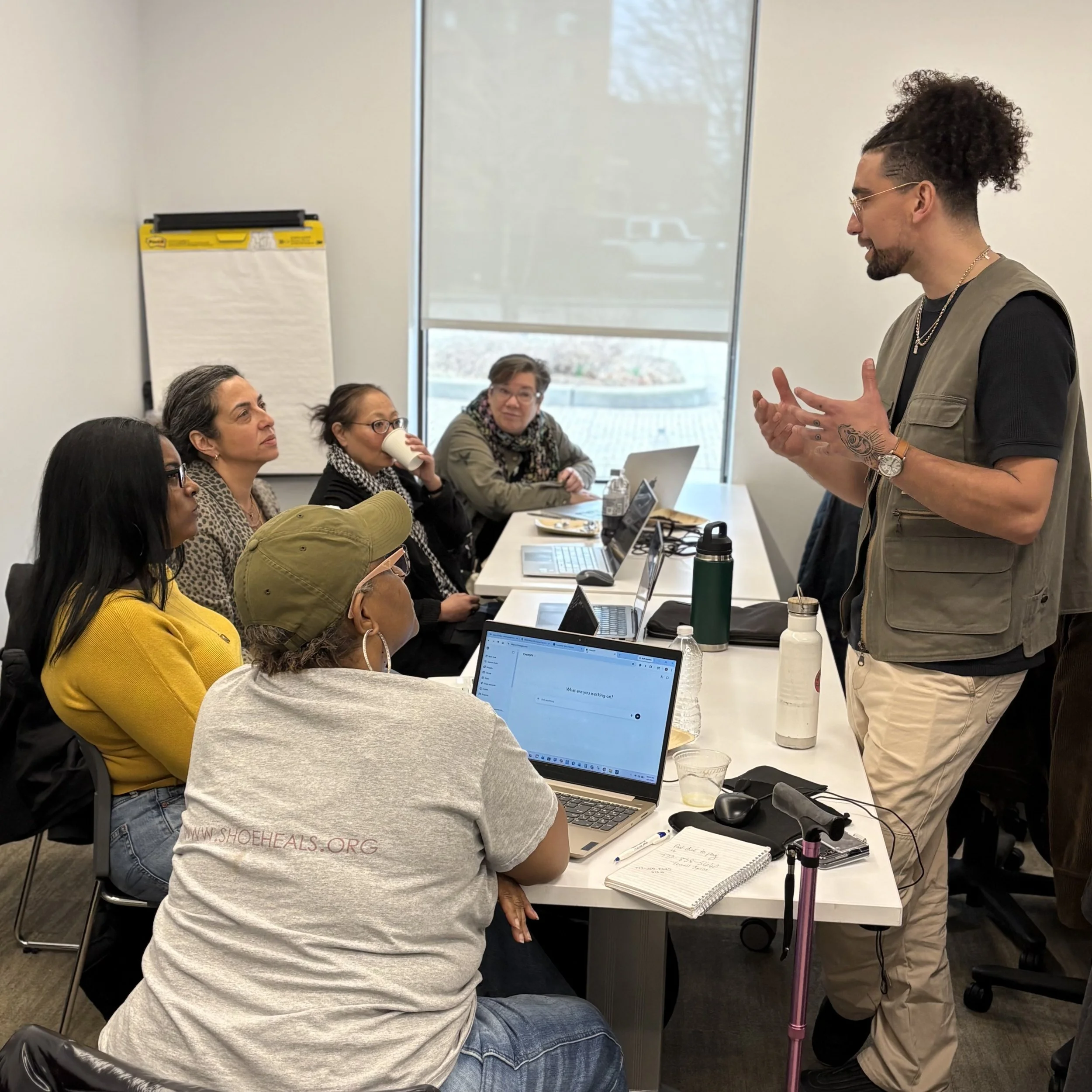
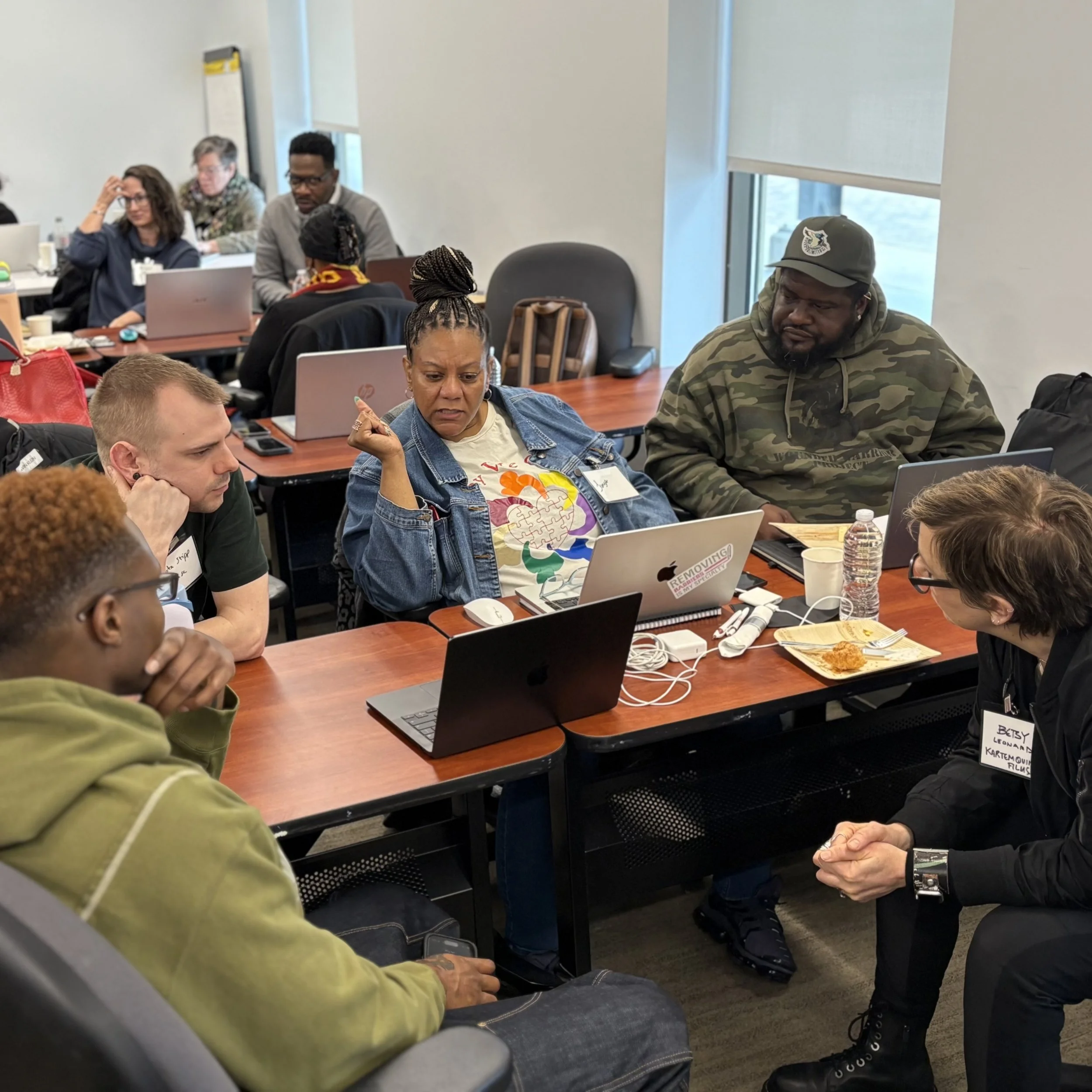
We also spent time on prompt engineering and how to structure the information you give LLMs when chatting (the way most people interact with AI) to get the most useful and reliable outputs. Things like giving the model a role, providing relevant context, requesting a specific format for the results (e.g., a spreadsheet or text document), and some plain-English guardrails (e.g., "don't make things up; ask if you need more information"). Being specific is most of the skill.
Finally, we demonstrated some more advanced use cases like email and workflow automation, custom applications, and AI agents. We showed some examples of what’s possible from organizations we’ve worked with to create customized LLMs (knowledge-based systems trained on a particular organization's mission, programs, voice, etc.), external-facing chat assistants that provide just-in-time answers, strategic planning applications, and prospect research databases.
It can be challenging to decide how to incorporate AI into your workflow. Our advice to workshop participants was to first start by thinking about the repetitive or time-consuming aspects of their work.How might they then produce drafts faster, automate email outreach, or compile development research? Those tend to be the easiest places to begin, and the time you get back is real.
“We believe this technology is too important to leave in the hands of technologists alone. People in the sector need to understand it by using it, so they can help guide its development and raise alerts about potential biases and harms. ”
Whether we like AI or not, the tech is here and looks to be here to stay. It will also keep getting faster and more powerful for the foreseeable future. Like others in the nonprofit community, we have reservations about the social, environmental, and ethical implications of what’s available now and what’s fast approaching. But we believe this technology is too important to leave in the hands of technologists alone. People in the sector need to understand it by using it, so they can help guide its development and raise alerts about potential biases and harms. The social sector, with mission-driven professionals, is the perfect community to socialize this tech in a more humanistic way.
The sky truly is the limit for what you can create with the help of AI. Sometimes the hard part is identifying an appropriate use-case, which requires some understanding of the underlying technology (machine learning) and willingness to experiment. You really can become an AI expert, saving time and money, increasing your productivity and focusing on what really matters, your mission.
If you're working on a policy at your org, or trying to figure out where AI might fit, we're glad to talk. Email info@chivnc.org to be connected to the authors or start a conversation with CVNC about support for your organization.
About the Authors:
Cory Garfin builds AI tools and capacities for nonprofits, including a theory of change builder called Throughlines. He previously spent nearly a decade as a researcher and strategist, the final two as co-director of Slover Linett at NORC, where he led projects with institutions like MCA Chicago, the Field Museum, the High Line, and the Smithsonian. A graduate of Carnegie Mellon's Entertainment Technology Center, he helped design YOUmedia, a digital learning space for teens, at the Chicago Public Library. He writes the newsletter AI for English Majors, where he grapples with AI on human terms.
Devon VanHouten-Maldonado is the Executive Director of SkyART, a nonprofit arts organization where he and his team have been working at the forefront of AI implementation at nonprofit organizations to increase capacity and revenue. Through that work, Devon began consulting and building customized AI solutions for other organizations including customized chat agents, automated workflows and fundraising tools. He also created Fundelop, an AI-powered platform that connects nonprofit leaders with new funders at a minimal cost. You can catch Devon every Friday night at 9pm on WIIT 88.9fm on Life Support Radio.